
Leslie Castillo
Hey there, fellow earth lovers! If you’re anything like me, your kitchen is the heart of your home—a place where nourishing meals come to life and memories are made over shared plates. But what if I told you that even in this sacred space, tiny invisible invaders could be sneaking into your food and body? We’re talking microplastics, those pesky little fragments that are everywhere these days, contributing to microplastics in food that we unknowingly consume. At EarthWoven Living, we’re all about making mindful, plastic-free kitchen swaps that keep your home healthy and our planet thriving. Today, let’s dive into what these micro-menaces are, why they matter as endocrine disruptors, and three super-easy ways to reduce microplastic exposure in your kitchen routine.
What Are Microplastics and Nanoplastics, Anyway?
Picture this: plastics breaking down into itty-bitty pieces over time. Microplastics are those super-small chunks of plastic, typically less than 5 millimeters across—think smaller than a sesame seed or even a grain of sand. They’re shed from everyday items like synthetic clothes, tire wear, or, yep, your kitchen tools, leading to widespread microplastics in the kitchen. Nanoplastics take it to the next level: they’re an ultra-tiny subset, often smaller than 1 micrometer (that’s 1/1000th of a millimeter), making them so small they can slip through filters and into our cells like uninvited guests at a party. These particles don’t biodegrade easily, so they stick around, hitching rides in water, air, and even our food.
How Do They Act as Endocrine Disruptors?
Now, here’s the sneaky part: microplastics aren’t just littering our oceans—they’re packing a punch to our health. Many plastics contain or leach out endocrine-disrupting chemicals (EDCs), like bisphenol A (BPA), that mimic our body’s natural hormones. These imposters can throw off your endocrine system—the master regulator of everything from metabolism and mood to reproduction and growth. For instance, they might weaken thyroid function over time or interfere with reproductive hormones, leading to issues like fertility challenges or hormonal imbalances. It’s like your body’s messaging system getting jammed with spam calls—subtle at first, but disruptive if ignored.
The good news? Small changes in your daily habits can cut down your exposure big time. Let’s zero in on the kitchen, where friction and heat make microplastic shedding extra likely, turning it into a hotspot for how to avoid microplastics in food.
3 Common Sources of Microplastics Hiding in Your Kitchen
Your go-to tools might be culprits without you even realizing it. Here’s the breakdown on key kitchen items to watch:
- Plastic Dish Brushes or Sponges/Scrubs: Every scrub-a-dub-dub releases thousands of microplastic fibers into your sink water, which can end up back in your dishes or down the drain and into waterways.
- Plastic Cutting Boards: Chopping away on these? The knife’s edge grates off microscopic plastic particles straight into your veggies, fruits, and proteins—yikes, right into your next meal.
- Plastic Spatulas: Stirring, flipping, and scraping generates heat and friction, shedding tiny plastic bits that melt into your food or scatter on surfaces.
These everyday essentials add up, turning your kitchen into an unwitting microplastic factory.
3 Simple Swaps to Ditch the Plastics (Eco-Friendly Kitchen Tools from EarthWoven!)
Ready to weave some earth-friendly magic into your routine with sustainable kitchen swaps? At EarthWoven, we curate tools that honor the planet while making your life easier. Here are three ways to banish microplastics from your kitchen:
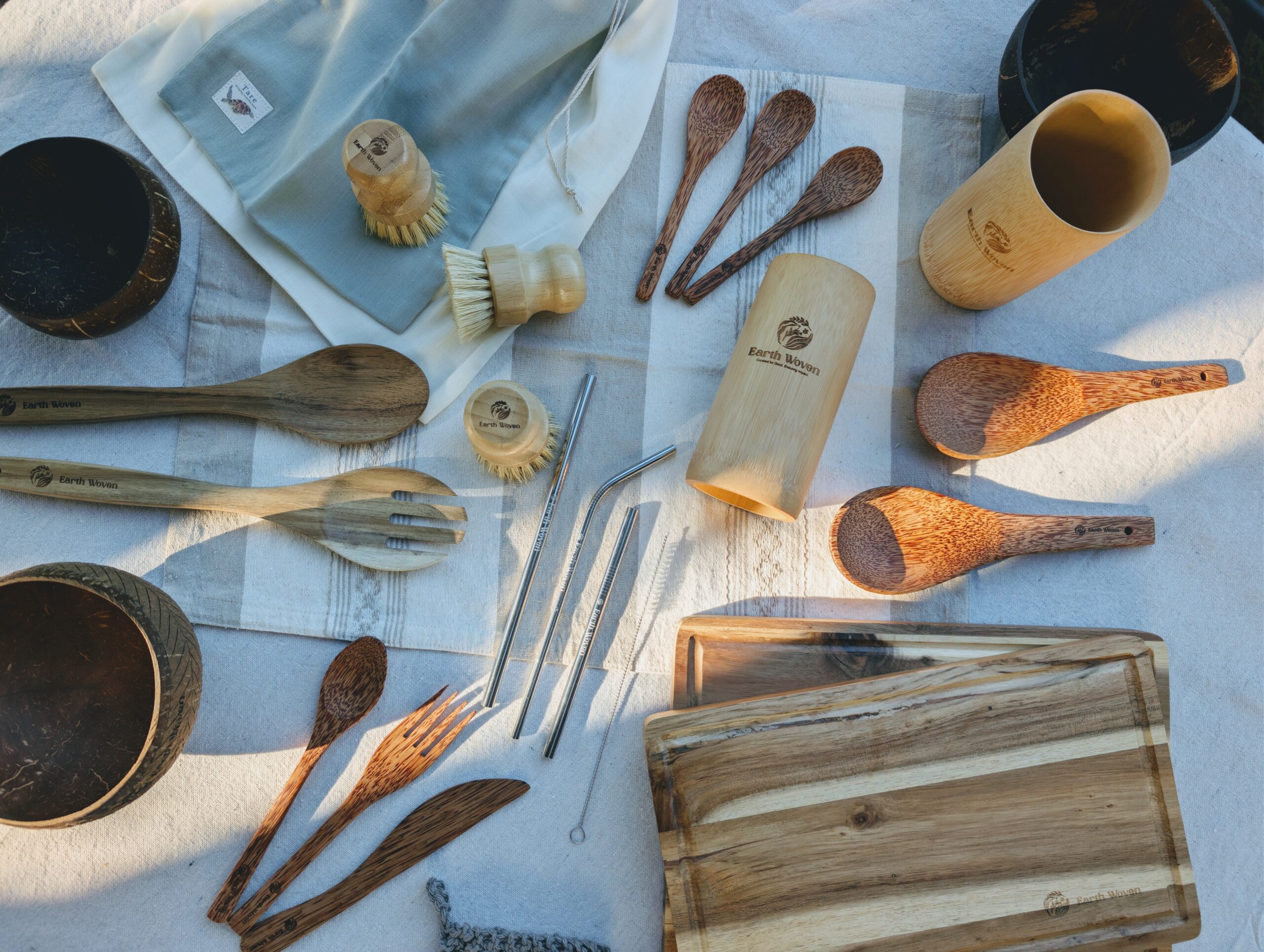
- Swap Your Plastic Dish Brush for Our Bamboo Dish Brush with Natural Bristles: Crafted from sustainable bamboo with plant-based bristles, this beauty scrubs tough without shedding synthetics. It’s compostable at the end of its life, closing the loop on waste.
- Upgrade to Our Acacia Wood Cutting Boards: Smooth, durable acacia wood resists knife marks and won’t leach plastics—plus, it’s naturally antibacterial and adds a warm, rustic vibe to your counter.
- Trade in Plastic Spatulas for Our Coconut Wood and Acacia Cooking Utensils: Heat-resistant and sturdy, these wooden wonders handle high temps without melting or flaking. They’re sourced responsibly, ensuring every flip supports forest health.
Head over to our online shop to grab these goodies and start your plastic-free kitchen glow-up today!
Weaving a Healthier Connection to Our Earth
At the end of the day, EarthWoven is a name that represents our deep connection to the planet. It’s an invitation to recognize that we as humans are a part of nature, and our daily choices have the power to protect and nurture it. By choosing natural, sustainable swaps like these, you’re not just safeguarding your family’s health from endocrine disruptors—you’re threading yourself back into the web of life, one eco-friendly meal at a time. What’s one small change you’ll make this week to reduce microplastic exposure? Drop it in the comments below—I’d love to hear!
With love and hope for our Planet,
Leslie Castillo
Founder of EarthWoven